01 · The mat
Lifting and martial arts, in one log
A class is logged the way it's trained: rounds with their length and rest, timed blocks for technique and drilling, and how hard each round felt (RPE). Pads, heavy bag, sparring, clinch work, shadowboxing, skipping rope and rolling are in the exercise list, and a BJJ, judo or wrestling session can be marked gi or no-gi.
Classes count the same as lifting. Rounds feed the recovery map next to your sets, and the week's training stress adds up both. In the model, an hour of sparring at RPE 8 counts for more than a hard lifting session.
There are ready-made shapes for a BJJ, Muay Thai and boxing class, so logging one after training takes a few taps.
02 · Open science
Every estimate, written up
Open science here means you can see how an estimate is made and check it yourself. For the recovery and training-stress models, the docs give the formula, each constant and where it comes from, a worked example, the limits, and an evidence level.
The numbers come from one small engine with a version number. It has no clock and no randomness, so the same log always gives the same result, and fixed test cases check that its outputs don't drift.
When I write about training, the charts come from that same engine and my own log: one person's data, and the posts say so.
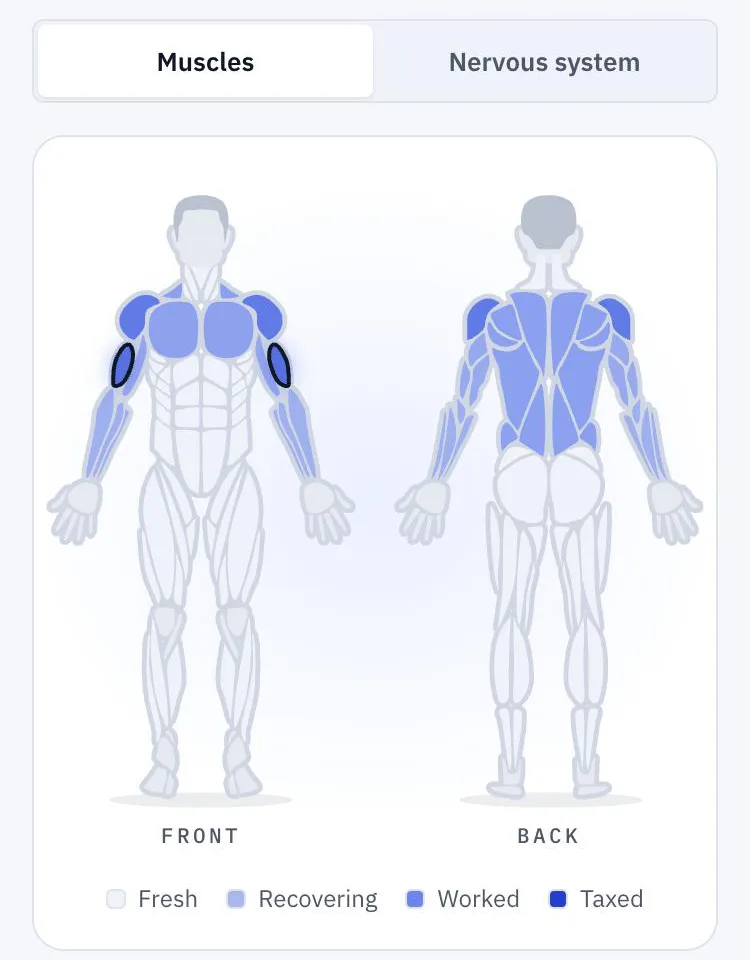
Fig. 3 — The core of the recovery model. The model page explains each step and the studies behind it.
Established
Recovery
Reasonable
Training stress
Prior
Contested
Experimental
Fig. 4 — The evidence scale on each model page, from well replicated to new and under test, and where the two published models sit.
Versioned
Not open yet
If you spot a mistake in a formula, write to me.
03 · The person
Who builds it
I'm Jakub. I've worked in data and AI for more than 12 years, now as a lead data engineer and data scientist. I've trained since I was a kid: karate first, with local and national competitions, then the gym and kickboxing. These days I do both in the same week.
Why it exists
My week is a mix: lifting on some days, kickboxing on others. I wanted one log for both, and to see how the two add up.
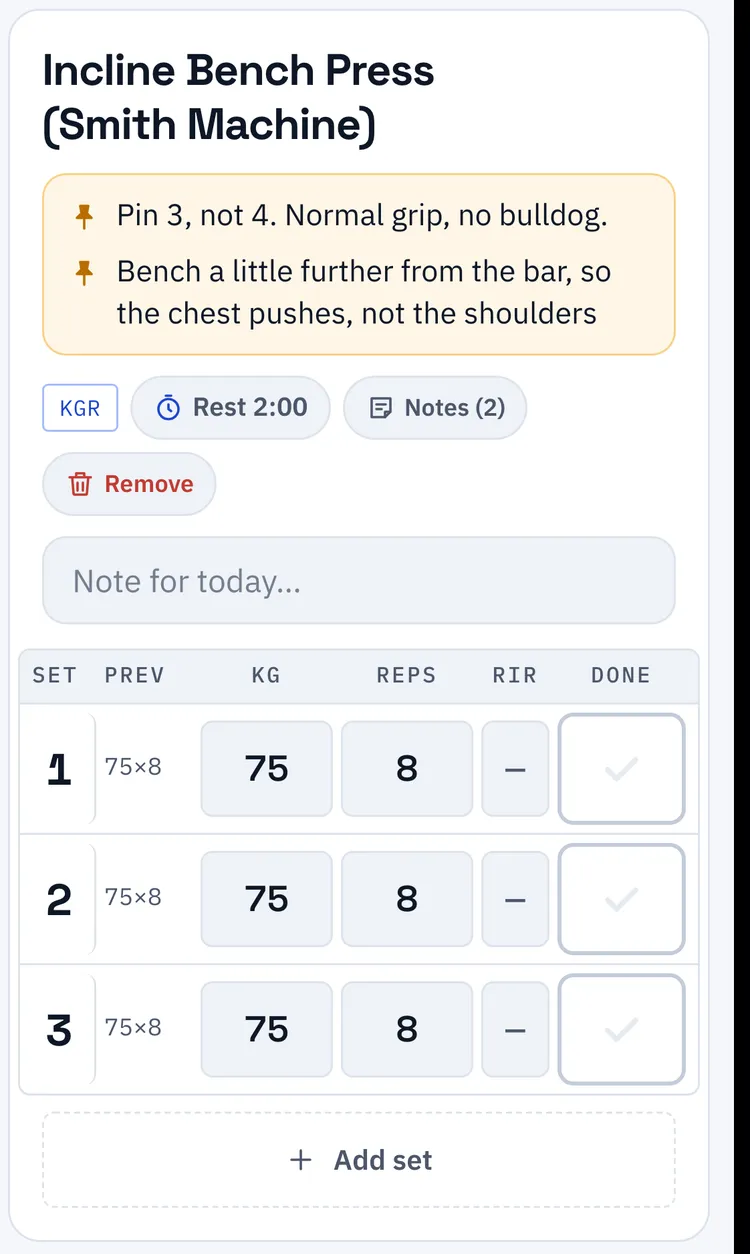
The app I used before was made for the gym, and a few things were missing for me. So I added them: sets logged per side for single-arm and single-leg work, notes that stay on an exercise (seat height, grip, pin), classes logged in rounds with the drills around them, and recovery estimates I can check.
I also wanted to know what an “AI coach” does before trusting one, so Sparlift's Coach is laid out step by step below.
04 · Before sparring
Me vs. me
For a long time I had a mental block before training, and before sparring most of all. What helped was treating the mat the way I treat the gym: a number of rounds to get through, work to do, and my own last session to beat.
In the gym there's always someone stronger on a given lift. On the mat there's always someone faster or stronger too. I'll lose to some people and beat others, and neither tells me much. My own numbers do: rounds done, how hard they felt, how I recovered. Focusing on them takes the pressure off before sparring and keeps me turning up.
That's what Sparlift is for: making progress on the mat the same way as in the gym. Research points the same way. In sport, a focus on improving yourself rather than beating others goes with more positive and fewer negative feelings (Harwood et al., 2015), and keeping track of progress, above all in writing, helps people reach their goals (Harkin et al., 2016).
Rounds per week · example
6 → 14
You against your own past, week by week
8 weeks agoThis week
05 · Open architecture
How it's put together
What happens to a set after you log it, how a Coach answer is made, and where your data lives.
From a set to a number
Your phone
Logs on the device first
Works with no signal, then syncs.
The app
Checks and stores it
Saved to your account.
The engine
Turns sets and rounds into numbers
Same log, same numbers. Versioned.
The database
Keeps your log
Delete it all from Settings.
A Coach answer
1 · Scope
A small AI model checks the question is about training.
2 · Lookups
Read-only, and only your own log.
3 · Facts
Numbers the engine computed.
4 · The model writes
A short answer around those facts.
5 · Number check
A number not in the facts stops the answer.
Fig. 7 — Two paths through Sparlift. Every Coach answer shows the sessions and numbers it was based on.
Hosting
AI models
Never
Contact
Questions, bugs, or a mistake in a formula: hello@sparlift.com